Latest Book :
Published Books

Renewing American Culture

Renewing American Culture


The rapid changes affecting America and the world have been led by economic and technological forces. The cultural dimensions of this change have been largely ignored in the process. Without a significant advance and innovation in the realm of culture and value, the great economic and technological gains of the recent past are exposed to great risk.

Password (if required): www./.ru

Renewing American Culture
M & M Scrivener press | 2006 | ISBN: 0976404117 | 240 pages | PDF | 1 MB

The Making of Modern Britain - Andrew Marr

Download : Andrew Marr, "The Making of Modern Britain" 


In The Making of Modern Britain, Andrew Marr paints a fascinating portrait of life in Britain during the first half of the twentieth century as the country recovered from the grand wreckage of the British Empire. Between the death of Queen Victoria and the end of the Second World War, the nation was shaken by war and peace. The two wars were the worst we had ever known and the episodes of peace among the most turbulent and surprising. As the political forum moved from Edwardian smoking rooms to an increasingly democratic Westminster, the people of Britain experimented with extreme ideas as they struggled to answer the question ‘How should we live?’ Socialism? Fascism? Feminism? Meanwhile, fads such as eugenics, vegetarianism and nudism were gripping the nation, while the popularity of the music hall soared. It was also a time that witnessed the birth of the media as we know it today and the beginnings of the welfare state. Beyond trenches, flappers and Spitfires, this is a story of strange cults and economic madness, of revolutionaries and heroic inventors, sexual experiments and raucous stage heroines. From organic food to drugs, nightclubs and celebrities to package holidays, crooked bankers to sleazy politicians, the echoes of today's Britain ring from almost every page.

Andrew Marr, "The Making of Modern Britain" 
2010 | ISBN-10: 0330510991, 0230709427 | 464 pages | EPUB, MOBI | 5,3 MB

The Political Power of Bad Ideas - Networks, Institutions, and the Global Prohibition Wave


In The Political Power of Bad Ideas, Mark Lawrence Schrad looks on an oddity of modern history-the broad diffusion of temperance legislation in the early twentieth century-to make a broad argument about how bad policy ideas achieve international success.

His root question is this: how could a bad policy idea-one that was widely recognized by experts as bad before adoption, and which ultimately failed everywhere-come to be adopted throughout the world? To answer it, Schrad uses an institutionalist approach, and focuses in particular on the US, Russia/USSR (ironically, one of the only laws the Soviets kept on the books was the Tsarist temperance law), and Sweden. Conventional wisdom, based largely on the U.S. experience, blames evangelical zealots for the success of the temperance movement.

Yet as Schrad shows, "prohibition was adopted in ten countries other than the United States, as well as countless colonial possessions-all with similar disastrous consequences, and in every case followed by repeal." Schrad focuses on the dynamic interaction of ideas and political institutions, tracing the process through which concepts of dubious merit gain momentum and achieve credibility as they wend their way through institutional structures.

And while he focuses on one episode, his historical argument applies far more broadly, and even can tell us a great deal about how today's policy failures, such as reasons proffered for invading Iraq, became acceptable.

The Political Power of Bad Ideas - Networks, Institutions, and the Global Prohibition Wave 
English | ISBN: 0195391233 | 2010 | PDF | 314 pages | 4 MB 

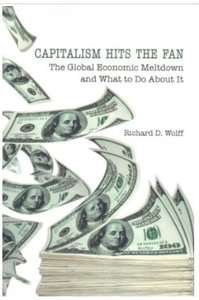
Capitalism Hits the Fan: The Global Economic Meltdown and What to Do About It


Richard D. Wolff - Capitalism Hits the Fan: The Global Economic Meltdown and What to Do About It 
Published: 2009-10-12 | ISBN: 156656784X | EPUB + MOBI | 262 pages | 3 MB "

With unerring coherence and unequaled breadth of knowledge, Rick Wolff offers a rich and much needed corrective to the views of mainstream economists and pundits. It would be difficult to come away from this... with anything but an acute appreciation of what is needed to get us out of this mess." --Stanley Aronowitz, Distinguished Professor of Sociology and Urban Education, City University of New York Capitalism Hits the Fan chronicles one economist's growing alarm and insights as he watched, from 2005 onwards, the economic crisis build, burst, and then dominate world events. The argument here differs sharply from most other explanations offered by politicians, media commentators, and other academics. Step by step, Professor Wolff shows that deep economic structures--the relationship of wages to profits, of workers to boards of directors, and of debts to income--account for the crisis. The great change in the US economy since the 1970s, as employers stopped the historic rise in US workers' real wages, set in motion the events that eventually broke the world economy. The crisis resulted from the post-1970s profit explosion, the debt-driven finance-industry expansion, and the sequential stock market and real estate booms and busts. Bailout interventions by the Federal Reserve and the US Treasury have thrown too little money too late at a problem that requires more than money to solve. As this book shows, we must now ask basic questions about capitalism as a system that has now convulsed the world economy into two great depressions in 75 years (and countless lesser crises, recession, and cycles in between). The book's essays engage the long-overdue public discussion about basic structural changes and systemic alternatives needed not only to fix today's broken economy but to prevent future crises.

 
Home | About | Disclaimer
Copyright © 2012. StealThisBookNow
Editor: Fullonline
Proudly powered by Blogger